Invar Fine Metal Masks for OLED Display Production
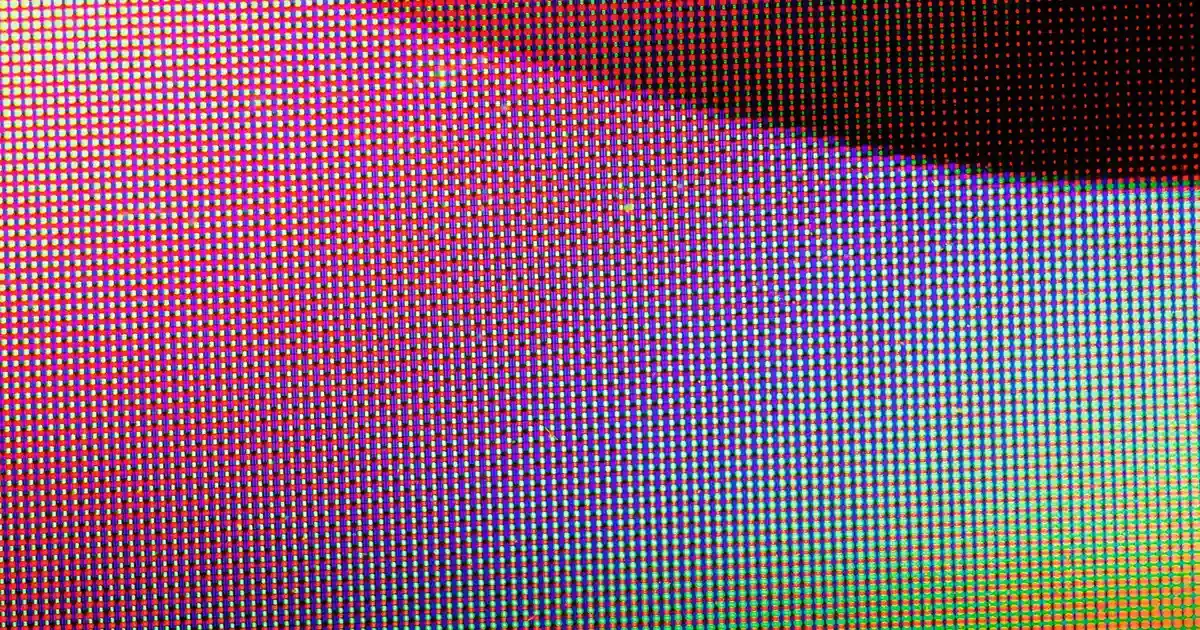
Every OLED smartphone screen starts as a glass plate on which millions of tiny coloured dots are laid down in a vacuum chamber. The dots are placed through a thin metal sheet with a precise pattern of openings, called a fine metal mask, or FMM. The mask must hold its pattern to a few micrometers while it sits in a warm chamber for hours. Invar foil is the material chosen for this job. This guide explains why, how the masks are made and which of the supporting parts are the kind of work a precision Invar machine shop can quote.
What a fine metal mask does
In vacuum thermal evaporation, organic materials are heated in a source until they vaporize. The vapor rises through the openings of the mask and condenses on the substrate above, forming a thin layer in the exact pattern of the openings. The process runs three times for red, green and blue, each time with a differently patterned mask, so that subpixels of three colours end up side by side.
Four things must hold true for the display to work:
- The openings are the right size and shape.
- The mask lies flat against the glass, so vapor does not spread under it.
- Each mask is positioned within a few micrometers of the glass pattern.
- The pattern does not shift as the chamber warms.
The fourth point is where Invar comes in.
Why Invar
During evaporation, the mask sits near a heated source and absorbs radiant heat, so its temperature rises by a few degrees or more. A material that expands as it warms would shift the opening pattern relative to the glass. Glass substrates for displays have a CTE of about 3 to 4 ×10⁻⁶ per K. A mask with a similar or lower CTE moves with the glass or less than it, which keeps the pattern in register.
| Material | Typical CTE (×10⁻⁶ per K) | Shift over 150 mm for a 2 K rise |
|---|---|---|
| Display glass (substrate) | about 3.5 | about 1.1 µm |
| Invar 36 foil | about 1.3 | about 0.4 µm |
| Stainless steel | about 17 | about 5.1 µm |
| Nickel | about 13 | about 3.9 µm |
Typical values for a hypothetical mask width of 150 mm and a 2 K rise.
The mismatch between the mask and the glass is what matters. Invar differs from the glass by about 2.2 ×10⁻⁶ per K, which gives roughly 0.7 µm of relative shift in the example. Stainless steel differs by about 13.5 and shifts by about 4 µm relative to the glass. With subpixel positions held to a few micrometers, that gap decides whether a metal can be used at all.
Invar also has useful secondary properties for the mask: it can be rolled or electroformed into very thin, uniform foil, it is ferromagnetic at room temperature so that a magnet plate above the glass can pull the mask flat against the substrate, and it has good etchability in ferric chloride for fine patterns.
How the masks are made
The path from raw metal to a mask on a frame has several stages, each handled by a specialist.
| Stage | What happens | Typical note |
|---|---|---|
| Foil production | Invar is rolled to very thin foil or electroformed onto a drum | Foil thickness around 20 µm to a few tens of µm |
| Cleaning and coating | Foil is cleaned and coated with a photoresist | Dust control critical |
| Exposure | A phototool pattern is exposed onto the foil | Pattern accuracy sets the opening accuracy |
| Etching | Ferric chloride removes metal at the openings | Etch factor and taper controlled |
| Inspection | Optical measurement of every opening and position | Vision systems, micrometer accuracy |
| Tensioning and welding | Mask stretched, laser welded to an Invar frame | Tension set to a specified value |
| Cleaning | Mask is cleaned for use and re-cleaned between runs | Limited number of cycles |
Typical industry description, not a process specification. Details differ between producers.
Thin foil is an advantage because a thinner mask casts a smaller shadow at the opening edge and allows finer pitches. The general behavior of etched Invar parts is described in photochemical etching or machining for thin Invar parts. Etched foil carries rolling stress, which is why flatness and tension control are central to the process.
The parts around the mask
The foil itself is made by a narrow group of specialist suppliers with the equipment and control for it. A precision machine shop is not part of that chain, and a buyer should not expect one to make masks. What a machine shop can make are the supporting parts, and those are made in the same way as other precision Invar hardware.
- Mask frames. A rectangular or strip frame in Invar, flat and stable, onto which the mask is welded. Flatness and parallelism of the frame decide the mask’s flatness.
- Tensioning fixtures. Tooling that stretches the mask to a set force before welding, with Invar elements where expansion could change the setting.
- Alignment fixtures and masters. Reference parts for aligning the mask to the substrate.
- Cassettes and carriers. Holders for masks during storage, cleaning and transfer.
- Magnet plate parts and spacers around the substrate stack in the chamber.
These parts follow the usual rules for stable Invar: rough, stress relieve, finish, stabilize and inspect at 20 °C, as in Invar stress relief in machining and Invar inspection temperature control. The wider machine tool context is in Invar semiconductor equipment machining.
Need a quote for this part? Get a quote for this part
Hypothetical worked example
A buyer needs an Invar frame for a strip mask, 600 mm long and 80 mm wide, with a flat welding surface. Numbers are hypothetical.
- The frame is machined from stabilized Invar plate, with an outer shape and a window.
- Flatness of the welding face is required to 5 µm over the length, and parallelism of the two long faces to 10 µm.
- After rough machining and stress relief, the frame is finished and stabilized for 24 to 48 hours at low temperature, then inspected at 20 °C on a CMM with the Invar CTE entered.
- After stabilization a second check shows 1 µm of change in flatness, within the allowance.
- The frame is cleaned for a vacuum environment and packed in sealed bags.
A frame that moved 20 µm over the first month would be useless, because the mask tension would change and the pattern would shift. The stabilization step is what makes the frame suitable.
Cleanliness and vacuum compatibility
Evaporation chambers run at high vacuum, and any contamination on a part can outgas, deposit on the substrate or contaminate the organic materials. Supporting parts for these tools are treated as vacuum hardware.
- Cutting fluids. Use fluids that clean off completely, and wash in a validated cycle. Residues bake out in the chamber.
- Surface condition. Smooth, burr-free surfaces hold less contamination. See deburring Invar without residual stress for methods that avoid embedded media.
- Cleaning. Ultrasonic cleaning, rinse and dry, followed by bagging in cleanroom film. Some users specify a vacuum bake before shipment.
- Fasteners and inserts. Vented screws and clean threads avoid trapped volumes that leak slowly into the chamber, as Invar cryogenic and vacuum applications explains.
- Plating. Bare Invar rusts in damp air. A coating, if used, must be vacuum compatible and low in particles, which Invar surface finish and coating compares.
A shop without a clean assembly area can still make the part. Cleaning and bagging can be done by a partner, but the RFQ should name who does what, so that no one assumes the other has covered it.
Quality records buyers usually ask for
Tool builders in display equipment usually ask for a package of records with each lot, because they need to trace a problem back to its cause.
| Record | Why it is asked for |
|---|---|
| Material certificate with heat number | Proves chemistry and CTE of the Invar stock |
| Heat treatment record | Shows stress relief and stabilization cycles, with furnace chart |
| CMM report at 20 °C | Dimensions, flatness and parallelism with compensation noted |
| Cleaning record | Process, date and operator, particle count if specified |
| Packing record | Bag type, desiccant, seal and labelling |
| First article report | Full inspection of the first part, signed off before the lot |
Matching these requirements early makes a quote more accurate. A drawing that lists them clearly lets the shop price the inspection and cleaning time, which are often a larger part of the cost than machining on small, flat frames. The certification trail for the material is covered in Invar material certification.
Limits of this guide and the sourcing picture
The fine metal mask itself is a specialized product of a small supply chain. Its design, materials and process are protected by the producers, and each display maker qualifies its own masks. A site like this one does not supply masks and does not claim to. The aim here is to explain the role of Invar in the process and to show where precision Invar machining supports it: frames, fixtures, tooling and handling parts. For those parts, the same discipline that governs any stable Invar structure applies, and Invar second source qualification describes how a buyer can add a second shop once a part is proven.
Why the technology is moving
Large OLED televisions mostly avoid fine metal masks, because a mask for a very large substrate sags and is hard to hold flat and in register. They use white OLED with colour filters, or other methods such as inkjet printing. Fine metal masks remain the main route for smartphone and small panel production, where substrate sizes are manageable. A buyer working in this area should expect the process to keep changing, and the demand for parts to follow. The wider use of low-expansion alloys in display tools is one of several applications described in Invar semiconductor equipment machining.
What to put in the RFQ
- Frame or fixture dimensions, flatness and parallelism targets with the measurement method
- Material condition: stabilized Invar with a certificate and heat number
- Cleaning and packing needs for vacuum use
- Lot size and repeat schedule
- Any contact with the mask or the substrate and the allowed finish there
Send the drawing through the RFQ form and we quote the finished parts and place the work with partner shops that machine stable Invar frames and fixtures for vacuum deposition tools. For handbook values see the Invar reference data and the Invar 36 machining page.
Frequently asked questions
What is a fine metal mask in OLED production?
It is a very thin metal sheet with a precise pattern of openings, placed against the glass substrate in a vacuum chamber. Organic material evaporates upward through the openings and lands only where the openings are, forming the red, green and blue pixels of one color at a time. The mask must be thin, flat and dimensionally stable, which is why Invar foil is used.
Can a general machine shop make fine metal masks?
No. The foil production, the fine etching, the tensioning and the welding to a frame form a specialist chain with its own equipment and process control. A precision machine shop can make the Invar frames, alignment fixtures, tensioning tooling and cassette parts that support the mask, which are the parts that fit a conventional Invar machining workflow.
Why is the mask frame also made of Invar?
The mask is stretched and welded to a frame, and the frame holds it taut. If the frame expanded more than the mask, temperature changes would loosen or tension the foil and shift the pattern. Making the frame from Invar or a similar low-expansion alloy keeps the pair moving together, so tension and position stay close to the set values.
Reviewed against
Values in this guide are typical handbook figures for planning. The mill certificate for your heat lot and the shop's quote for your geometry govern.
Need a quote for this part?
Send the drawing. We reply within 24 business hours with one itemised quote for the finished parts and place the work with a partner shop that machines Invar.
Get a quote for this part